
ROTHRESTORATION

September 2025 Lowcountry Real Estate Market Update

Here’s your professional snapshot of real estate activity across the Lowcountry this month. As we move into early fall, the market continues its steady shift toward balance—still active, but with more breathing room for buyers and strategic opportunities for sellers. Whether you’re a homeowner, investor, or prospective buyer, keeping up with these trends will help you make confident decisions. Key Developments:• Median prices up +3.6% YoY, holding strong above $600K• Days on Market stretched to 60 days, showing buyer caution• Inventory up nearly +20% YoY, giving buyers more options Market Insight:Charleston County is still seller-friendly, but balance is creeping in. The luxury segment on Sullivan’s Island and downtown Charleston continues to draw high demand, but even premium homes are sitting longer. Well-prepared buyers now have more negotiating power. Highlights:• Median home price rose slightly, up +1.2% YoY• Homes are taking longer to sell, averaging 66 days• Inventory is building steadily, creating leverage for buyers Market Insight:Berkeley County’s steady, affordable appeal remains strong, particularly in Goose Creek. First-time buyers and investors continue to find opportunities here. The extra time on market favors buyers, who can now compare properties and negotiate. By-the-Numbers:• Median sale price up only +0.5% YoY—growth slowing• Days on Market climbed to 63 days• Supply rose to 3.8 months, giving buyers more breathing space• Closed sales dipped ~18% compared to last September Market Insight:Dorchester County is clearly cooling. Summerville continues to attract families for its schools and community feel, but sellers are adjusting to longer timelines and fewer multiple-offer scenarios. Buyers benefit from improved leverage, though move-in-ready homes are still in demand.   Market Takeaways•    Charleston County: Still leaning seller-friendly, but balance is coming—higher prices, longer timelines, and more inventory.•    Berkeley County: Affordable and steady—value markets like Goose Creek offer buyers more negotiating room.•    Dorchester County: Cooling fastest—slower sales, rising supply, and opportunities for patient buyers. What This Means for You •    Buyers: More homes, less rush. Take time to compare, negotiate, and shop smart.•    Sellers: Competitive pricing and strong staging are now critical to stand out.•    Investors: Goose Creek and Summerville remain hotspots for long-term appreciation and rental demand. Want neighborhood-specific insights—like Mt. Pleasant, Goose Creek, or Summerville breakdowns with detailed charts?Schedule Your FREE Consultation Today: 📞 (843) 790-4522📧 info@lowcountrycharmed.com🌐 www.lowcountrycharmed.com

September 2025 Lowcountry Real Estate Market Update Read More »

The Best Layouts for Open-Concept Living

Open-concept living has become a hallmark of modern home design—and for good reason. By removing walls and blending spaces, you create a home that feels larger, brighter, and more connected. But not all open layouts are created equal. To truly enjoy the benefits, your home needs flow, function, and thoughtful design. Here are some of the best layouts and ideas to make open-concept living work beautifully in the Lowcountry. Why Homeowners Love Open-Concept Living •    Natural Light – Fewer walls mean more sunlight flooding through your home.•    Entertaining Made Easy – Host guests without feeling separated in the kitchen.•    Family Connection – Stay connected across spaces—whether cooking, doing homework, or relaxing.•    Flexible Design – Create zones that adapt to your lifestyle, from dining nooks to reading corners. The Best Layout Ideas 1. The Kitchen-Centric Layout At the heart of many open-concept homes is the kitchen. By centering your layout around an island, you create a natural gathering spot that blends seamlessly with the dining and living areas. •    Large islands with seating double as dining tables.•    Open shelving and statement lighting keep the space stylish.•    Ideal for entertaining and busy family life. 2. Defined Zones Without Walls Open doesn’t have to mean one big box. Smart furniture placement and design cues can define spaces while maintaining flow. •    Area rugs to visually anchor living and dining zones.•    Lighting fixtures that distinguish spaces (chandelier over dining, pendants over island).•    Sofas or shelving units acting as “soft dividers.” 3. The L-Shaped Layout Perfect for smaller or rectangular homes, the L-shape creates a sense of separation while keeping sightlines open. •    Kitchen in one corner with living/dining flowing around it.•    Allows for cozy corners while still feeling airy.•    Great for homes where full open space might feel too vast. 4. Indoor-Outdoor Flow In the Lowcountry, open-concept often extends beyond the walls. French doors, sliding glass walls, or screened porches blur the line between indoors and outdoors. •    Living area opens directly to a porch or patio.•    Outdoor kitchens complement indoor ones.•    Perfect for year-round entertaining. 5. The Great Room Concept For larger homes, a great room combines living, dining, and kitchen into one grand space. High ceilings, large windows, and minimal barriers create a stunning effect. •    Works well with vaulted ceilings or exposed beams.•    Creates a “wow” factor while remaining functional.•    Often paired with a statement fireplace or central feature wall. Tips for Making It Work •    Keep a Cohesive Style – Choose a consistent color palette and finishes to avoid a cluttered look.•    Mind the Acoustics – Open spaces can echo; rugs, curtains, and textiles soften sound.•    Plan Storage – Without walls, you lose closets. Built-ins and smart furniture solve the problem.•    Lighting Layers – Combine recessed, task, and accent lighting to keep the space versatile. Open-concept living is about more than knocking down walls—it’s about designing a home that feels connected, functional, and full of light. With the right layout, your space will be perfect for both everyday living and Lowcountry entertaining. Let’s talk about layouts that make sense for your home and add value in the Charleston market. 📞 (843) 790-4522✉ info@lowcountrycharmed.com🌐 www.lowcountrycharmed.com    

The Best Layouts for Open-Concept Living Read More »

When to DIY vs. When to Call the Pros

Owning a home means repairs, upgrades, and projects will always pop up. Some are fun weekend jobs you can knock out with a little elbow grease, while others are complex, risky, or downright dangerous if you don’t know what you’re doing. The secret to saving money and protecting your investment is knowing the difference. Here’s a detailed guide to help you decide whether to DIY or call in the experts. ✅ When It’s Smart to DIY 1. Painting & Cosmetic Touch-Ups Painting walls, trim, or even cabinets can dramatically transform a room without draining your wallet. With the right prep—taping edges, priming surfaces, and using quality rollers—this is a satisfying DIY project. •    Easy wins: Accent walls, repainting a bedroom, freshening up baseboards.•    Avoid if: You’re dealing with high ceilings, lead paint in older homes, or intricate finishes 2. Landscaping & Outdoor Care Gardening, mulching, trimming shrubs, or planting flowers not only improves curb appeal but also helps you connect with your home. Even simple DIY landscaping can raise property value. •    Easy wins: Laying sod, planting a vegetable garden, installing flowerbeds.•    Avoid if: It involves major grading, irrigation systems, or tree removal (which can be dangerous). 3. Minor Repairs & Replacements These are the small fixes you can typically handle with a screwdriver and some YouTube guidance. Examples: o    Replacing cabinet knobso    Fixing a running toilet (flapper replacement)o    Swapping out a faucet aeratoro    Patching small drywall holes Avoid if: The repair reveals bigger underlying issues (like mold, wiring, or plumbing leaks). 4. Simple Flooring Projects Peel-and-stick tiles, click-lock vinyl, and laminate planks are designed for DIYers. With basic tools, you can tackle small spaces like laundry rooms or guest bedrooms. •    Easy wins: Replacing carpet in one room, updating kitchen backsplashes with peel-and-stick options.•    Avoid if: You’re dealing with hardwood sanding, tile setting, or large uneven subfloors—those require precision. 5. Decorating & Home Organization This is where you can be creative without risk. Hanging shelves, installing curtain rods, or building IKEA furniture adds personal flair to your home. •    Easy wins: Creating gallery walls, setting up closet organizers, updating light switch covers.•    Avoid if: Shelves or furniture need to anchor into tricky materials like brick or load-bearing walls.   🚫 When to Call the Pros 1. Electrical Work  Even small mistakes in electrical wiring can cause fires or electrocution. Unless you’re just changing a lightbulb or swapping a fixture with identical wiring, hire a licensed electrician. •    Pro jobs: Installing ceiling fans, adding outlets, rewiring panels, running new lines.•    Risk of DIY: Code violations, fire hazards, and safety risks. 2. Plumbing Beyond Basics 🚰 Tightening a leaky faucet? Sure. But anything that involves pipes, water heaters, or drains can quickly go from a drip to a flood. •    Pro jobs: Sewer line work, pipe replacements, water heater installation, major leaks.•    Risk of DIY: Water damage, mold, and expensive emergency repairs. 3. Roofing & Gutters 🏠 Roofing is dangerous work, and mistakes can lead to leaks and structural issues. Even gutter installation on two-story homes can be risky. •    Pro jobs: Replacing shingles, repairing flashing, installing skylights.•    Risk of DIY: Falls, improper sealing, water infiltration. 4. Structural & Load-Bearing Changes 🔨 Knocking down walls might look easy on TV, but it can compromise the structural integrity of your home. These projects require permits and engineering expertise. •    Pro jobs: Room additions, wall removal, foundation repair.•    Risk of DIY: Collapsing walls, costly damage, unsafe living conditions. 5. HVAC Systems  Your heating and cooling systems involve electrical components, refrigerants, and complex mechanics. Regular filter changes are DIY-friendly, but repairs should always be left to professionals. •    Pro jobs: AC repairs, furnace servicing, ductwork installation.•    Risk of DIY: Voiding warranties, carbon monoxide leaks, inefficient performance. The “Grey Area” Projects Some projects fall in between—where a handy homeowner could DIY, but may benefit from professional guidance. •    Tiling a bathroom floor: Doable with patience, but tricky cuts and waterproofing may require a pro.•    Installing doors/windows: You can attempt, but energy efficiency and sealing are critical.•    Exterior painting: Manageable on one-story homes, but risky on taller homes.7 DIY projects are a great way to save money and build confidence as a homeowner—but only when you know your limits. If a project risks your safety, your home’s structure, or your finances, that’s the moment to call in the pros. Think of it this way: DIY is for small wins; pros are for long-term value. 📞 (843) 790-4522✉ info@lowcountrycharmed.com🌐 www.lowcountrycharmed.com    

When to DIY vs. When to Call the Pros Read More »

10 Reasons Buyers Can’t Resist Charleston Homes

You’ve cleaned, decluttered, and priced your home just right. You’re confident buyers will fall in love the second they walk through the door. But here’s the truth: sometimes it’s the little things that make—or break—the deal. Think of selling your home like going on a first date. Big qualities matter, but tiny details—like food stuck in your teeth or a wrinkled shirt—can ruin the impression before it even begins. Buyers are the same way. They may adore your floor plan, but a small, negative detail can plant doubt and keep them from making an offer. Let’s dive into 9 little things that can quietly sabotage a home sale—and how to fix them before buyers even notice. 1. Lingering Odors Smells are powerful. If buyers walk in and catch a whiff of last night’s dinner, pets, or cigarette smoke, they’ll remember it—not your beautiful kitchen.Pro tip: Bake cookies or simmer cinnamon on the stove for showings. It creates a warm, “homey” vibe that makes buyers want to linger. 2. Too Much “You” Your wall of family portraits, the neon-green nursery, or the collection of vintage teapots—these reflect your life, not theirs. Buyers need to imagine themselves in the space.Pro tip: Think model home. Neutral walls, clean surfaces, and just a few tasteful décor pieces let buyers fill in their own story. 3. Outdated Fixtures That brass chandelier might have been the height of style in 1998, but today it whispers “this house needs work.” Buyers notice details like faucets, cabinet pulls, and light fixtures more than you think.Pro tip: A quick weekend update with modern finishes instantly freshens your home—and it’s surprisingly affordable. 4. Bad Lighting A dim room feels smaller, colder, and less welcoming. If buyers can’t see your home, they won’t fall in love with it.Pro tip: Switch to daylight bulbs, open curtains, and add mirrors to bounce natural light. Bright homes sell faster—period. 5. Curb Appeal Neglect The yard is the handshake before buyers even step inside. Overgrown grass, weeds, or peeling paint on the front door tell buyers: “This home hasn’t been cared for.”Pro tip: Fresh mulch, trimmed bushes, and a pop of color (like a potted plant by the entryway) make a world of difference. 6. Unfinished Repairs That squeaky door or dripping faucet might seem small, but to buyers it’s a flashing neon sign: maintenance alert. If you skipped fixing this, what else did you skip?Pro tip: Walk through your house like a buyer would. Tighten, patch, polish, and fix the little things before they see them. 7. Clutter Creep Every home collects “stuff”—but buyers aren’t there to see your belongings. Crowded countertops and overflowing closets make homes feel smaller.Pro tip: Less is more. Think: 30% of your stuff in storage, 70% neatly displayed. 8. Pets on Parade We love our furry friends, but not all buyers do. Seeing pet hair, litter boxes, or even meeting your sweet pup during a showing can be an instant deal-killer.Pro tip: During showings, whisk pets (and their accessories) out of the house. Buyers will focus on the home, not your four-legged family member. 9. Paint Problems Your bold red dining room or neon-blue bedroom may express personality, but to buyers it screams “repaint.” Strong colors can feel like extra work. Pro tip: Stick with warm neutrals. They photograph better, brighten spaces, and appeal to the widest audience.   Little details matter—sometimes more than the big ones. Fixing these small issues doesn’t just make your home more appealing; it gives buyers confidence that your home has been well-cared for. Selling a home is like setting the stage. When the spotlight shines, you want buyers to imagine their life there, not get distracted by a squeaky hinge or funny smell. Ready to sell your home with confidence? At Lowcountry Charmed, we help sellers prepare, stage, and market their homes so the little things never stand in the way of a big sale. 📞 (843) 790-4522✉ info@lowcountrycharmed.com🌐 www.lowcountrycharmed.com

10 Reasons Buyers Can’t Resist Charleston Homes Read More »

The Complete Home Buying Process: Step-by-Step Guide

  Buying a home is more than just a transaction — it’s a journey filled with important decisions, negotiations, and milestones. Whether you’re a first-time buyer or purchasing your next investment, understanding the process will help you move forward with confidence. Here’s a detailed look at the 14 essential steps of the home buying process: 1. Consultation: Defining Your Vision The journey begins with a consultation with your real estate agent. This is where you get crystal clear on what you’re looking for. Together, you’ll discuss: •    Your needs and lifestyle: Do you need extra bedrooms, a home office, or a big backyard?•    Preferred locations: Neighborhoods, school districts, proximity to work, or community amenities.•    Timeline: Are you hoping to buy within the next 30 days, or do you have more flexibility?•    Must-haves vs. nice-to-haves: Separating essentials (like number of bedrooms) from preferences (like a pool). This step is about creating a roadmap that ensures your home search is targeted and efficient. 2. Pre-Approval: Establishing Your Budget Before touring homes, it’s crucial to understand your financial position. A mortgage pre-approval will: •    Determine your monthly payment comfort zone based on income, credit, and debt.•    Set your price range so you don’t waste time on homes outside your budget.•    Show sellers you’re serious, since a pre-approval letter strengthens your offer.•    Lock in interest rates (in some cases) so you’re protected if rates rise. Pro tip: Avoid making big financial moves (like buying a car or changing jobs) until after closing. 3. Searching for Homes: Exploring Your Options With your budget set, the home search begins! You and your agent will: •    Browse MLS listings and other online platforms.•    Tour off-market homes and attend private showings.•    Compare different neighborhoods for commute times, schools, and amenities.•    Use tools like Zillow or your agent’s website to track and save favorites. This is the exciting part — where you begin to see your dream home take shape. 4. Identifying Properties: Doing the Homework Once you’ve found homes you love, your agent will dig deeper by: •    Pulling comparable sales (comps): What have similar homes in the area recently sold for?•    Crafting pricing strategies so you don’t overpay in a competitive market.•    Reviewing the home’s history (days on market, past sales, or price reductions). This step ensures your offer is backed by data, not emotions. 5. Writing the Purchase Offer: Making Your Move When you’re ready to buy, your agent will prepare and submit an offer that includes: •    Purchase price and terms (closing date, contingencies, etc.).•    Pre-approval letter and proof of funds (for the down payment).•    E-signatures to speed up the process.•    Negotiation strategies to increase your chances of acceptance.  A strong offer balances competitiveness with protection of your interests. 6. Contract Acceptance: Entering Escrow If the seller accepts your offer, you move into escrow — a neutral stage where a third party manages funds and documents. During this time: •    Escrow is officially opened.•    Earnest money deposit (EMD) is submitted, showing good faith.•    Timelines begin, starting the countdown to inspections, disclosures, and closing. Escrow acts as a safety net for both buyer and seller. 7. Disclosures: Reviewing the Details Sellers are legally required to disclose important information about the property. You’ll receive: •    Title report: Confirms ownership and identifies liens or issues.•    Seller’s disclosures: Known repairs, renovations, or property conditions.•    Physical contingency: Opportunity to withdraw if major problems are found.  Read disclosures carefully — they give you a full picture of the home before moving forward. 8. Inspections: Looking Under the Hood Inspections help uncover hidden issues that may not be visible during a tour. This typically includes: •    General home inspection (roof, plumbing, electrical, foundation, etc.).•    Specialty inspections (pest, mold, radon, or sewer, depending on location).•    Repair requests: If issues are found, you can negotiate repairs or credits. This step gives you peace of mind and protects your investment. 9. Appraisal: Confirming Value Your lender requires an appraisal to ensure the home’s price is fair. The appraiser will: •    Compare the home to recent sales in the area.•    Evaluate its condition, location, and features.•    Provide an estimated market value.  If the appraisal comes in lower than the offer price, renegotiation may be necessary. 10. Loan Status: Securing Financing Your loan enters its final stages of approval, including: •    Underwriting: A detailed financial review.•    Meeting conditions: Providing extra documents if requested.•    Full approval: The lender gives the green light to proceed.  Reminder: Do not take on new debt or make big purchases until after closing! 11. Removing Contingencies: Committing Fully Once inspections, appraisal, and financing are settled, you’ll remove all contingencies. This signals you’re fully committed to completing the purchase. 12. Escrow Documents & Signing: The Legal Wrap-Up Next, you’ll review and sign the final escrow paperwork. This includes: •    Loan documents•    Closing disclosure (final breakdown of costs)•    Title transfer papers  This step makes everything official — you’re almost at the finish line. 13. Closing: Making It Official On closing day: •    Your lender funds the loan.•    Escrow distributes funds to the seller.•    The sale is recorded with the county.  At this point, you are legally the homeowner! 14. Keys + Possession: Welcome Home! The final (and most exciting) step: you receive your keys and can move into your new home.    The home buying process may feel like a marathon, but every step serves an important purpose. From pre-approval to closing, your agent and lender are there to guide you, protect your interests, and make sure the journey ends with you walking into the perfect home. Buying a home isn’t just a financial transaction — it’s about creating a foundation for your future. With the right guidance and preparation, the process can be smooth, successful, and even enjoyable.   Ready to buy a

The Complete Home Buying Process: Step-by-Step Guide Read More »

Stress-Free Moving Hacks for a Smooth Transition

Moving to a new home can be an exciting yet daunting experience. The process involves numerous tasks, from packing up your belongings to settling into a new environment. However, with the right strategies, you can make the transition smooth and stress-free. By planning ahead and utilizing some practical hacks, you can simplify the moving process and focus on the excitement of starting fresh in a new place. Start Early and Create a Timeline One of the most effective ways to ensure a smooth move is to start planning early. Creating a timeline helps you stay organized and ensures that you complete all necessary tasks before moving day. Begin by setting a moving date and working backward to establish deadlines for each task. This includes decluttering, packing, notifying utility companies, and arranging for movers. By breaking down the process into manageable steps, you can avoid last-minute stress and ensure that everything is ready on time. Declutter and Organize Before packing, take the opportunity to declutter your home. Go through each room and decide which items you want to keep, donate, or discard. This not only reduces the amount of stuff you need to move but also helps you start fresh in your new home. Organize your belongings into categories and label boxes accordingly. This makes unpacking easier and ensures that you can find essential items quickly once you arrive at your new home. Gather Packing Supplies Having the right packing supplies is crucial for a successful move. Stock up on sturdy boxes, packing tape, bubble wrap, and markers. Consider using specialized boxes for fragile items, such as dish packs for kitchenware or wardrobe boxes for clothing. Additionally, keep a few essential supplies on hand, such as scissors and a utility knife, to make the packing process more efficient. By being well-prepared, you can pack your belongings securely and prevent damage during transit. Pack Strategically Packing strategically can save you time and effort when moving. Start by packing items you use less frequently, such as seasonal clothing or holiday decorations. Label each box with its contents and the room it belongs to, which will make unpacking easier. Use soft items like towels or blankets to cushion fragile items, and fill empty spaces in boxes to prevent shifting. Consider packing a separate box with essentials you’ll need immediately upon arrival, such as toiletries, a change of clothes, and important documents. Hire Professional Movers or Enlist Help Deciding whether to hire professional movers or enlist the help of friends and family is an important consideration. Professional movers can handle the heavy lifting and transportation, allowing you to focus on other aspects of the move. If you choose to hire movers, research reputable companies and book them well in advance. Alternatively, if you’re enlisting help from friends and family, coordinate schedules and provide clear instructions to ensure a smooth moving day. Notify Important Parties As you prepare to move, remember to notify important parties of your change of address. This includes updating your address with the post office, banks, insurance providers, and any subscription services. Inform utility companies of your move-out and move-in dates to ensure a seamless transition of services. By taking care of these details ahead of time, you can avoid disruptions and ensure that your new home is ready for your arrival. Take Care of Utilities and Services Before moving, arrange for the disconnection of utilities at your current home and the connection of services at your new residence. This includes electricity, gas, water, internet, and cable. Schedule these changes in advance to avoid any gaps in service. Additionally, consider setting up new accounts for services like trash collection or home security if needed. Taking care of these logistics ensures that your new home is fully functional from day one. Plan for Pets and Children Moving with pets or children requires additional planning to ensure their comfort and safety. Arrange for childcare or pet care on moving day to minimize stress and distractions. Prepare an essentials kit for your children, including snacks, toys, and comfort items, to keep them occupied during the move. For pets, create a safe space with familiar items like bedding and toys to help them adjust to the new environment. By considering the needs of your family members, you can make the transition smoother for everyone. Unpack Methodically Once you’ve arrived at your new home, take a methodical approach to unpacking. Start with essential items and gradually work your way through each room. Focus on one area at a time to avoid feeling overwhelmed. As you unpack, take the opportunity to organize your belongings and make your new space feel like home. Consider creating a checklist to track your progress and ensure that everything is accounted for. Settle Into Your New Community After the move, take the time to settle into your new community. Explore the neighborhood, introduce yourself to neighbors, and locate nearby amenities like grocery stores and parks. Consider joining local clubs or organizations to meet new people and get involved in community activities. By immersing yourself in your new surroundings, you can quickly feel at home and start building connections in your new environment. Ready for a Smooth Move? With these stress-free moving hacks, you’re well on your way to a smooth transition into your new home. Remember, a little preparation goes a long way in making the process enjoyable. If you’re moving to the Lowcountry and need expert guidance, Lowcountry Charmed LLC is here to help. Contact them today to ensure your move is as seamless as possible!

Stress-Free Moving Hacks for a Smooth Transition Read More »

The Future of Countertop Materials: What’s Next?

Countertops are more than just functional surfaces—they’re design statements that set the tone for kitchens, bathrooms, and even outdoor living spaces. Over the years, we’ve seen granite, marble, and quartz dominate the market, but as technology advances and sustainability becomes a priority, the future of countertop materials is shifting. So, what’s next in the world of countertops? Let’s explore the trends and innovations shaping tomorrow’s surfaces. 1. Sustainable & Recycled Materials Homeowners are looking for eco-friendly options that minimize environmental impact. Recycled glass, composite surfaces, and countertops made from reclaimed wood or concrete are gaining popularity. Not only are they stylish, but they also help reduce waste. 2. Ultra-Compact Surfaces Materials like sintered stone (brands such as Dekton and Neolith) are engineered to withstand extreme heat, scratches, and stains. They’re thinner, sleeker, and perfect for modern, minimalist designs. Expect to see these surfaces in both kitchens and outdoor spaces. 3. Smart Countertops Yes, even countertops are getting “smarter.” Some manufacturers are experimenting with built-in wireless charging pads, LED indicators, and antimicrobial technology. Imagine placing your phone on the kitchen counter and charging it while you cook! 4. Bold Colors & Patterns While neutral tones remain timeless, the future points to countertops that make a statement. Expect striking veining, deep jewel tones, and dramatic finishes that turn surfaces into focal points. 5. Porcelain Slabs Porcelain countertops are rising in popularity thanks to their durability, stain resistance, and ability to mimic natural stone. They’re also lightweight and available in large-format slabs, making them a versatile option for sleek, modern kitchens. 6. Mixed-Material Countertops Designers are getting creative by combining materials—such as wood with stone, or concrete with metal accents—to create unique, custom looks. These hybrid designs reflect both function and artistry.   Countertops are no longer just about durability—they’re about sustainability, technology, and design innovation. Whether you prefer eco-friendly materials, futuristic smart features, or bold statement surfaces, the future of countertops offers something for every style and lifestyle. Dreaming of a home with a kitchen that inspires?Start your search today📞 (843) 790-4522📧 info@lowcountrycharmed.com🌐 www.lowcountrycharmed.com    

The Future of Countertop Materials: What’s Next? Read More »

Creative Ceiling Designs for Home Improvement

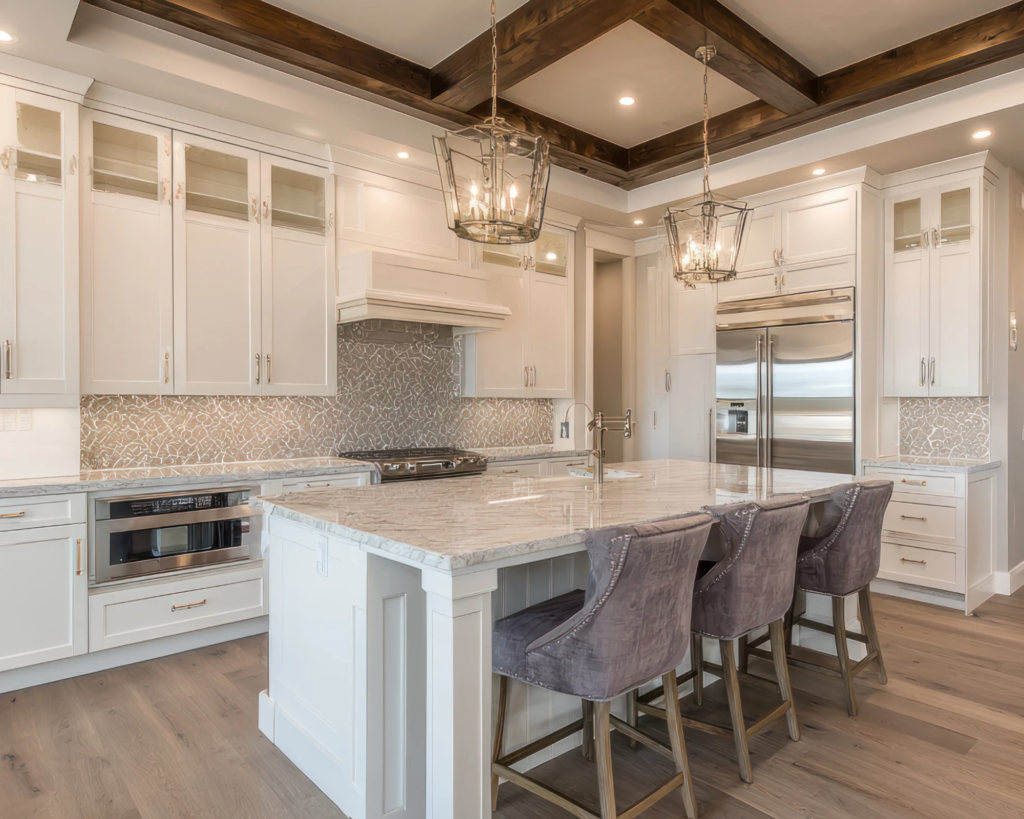
When it comes to home improvement, most homeowners focus on new floors, fresh paint, or updated furniture. But there’s one area that often gets overlooked—the ceiling. Known as the “fifth wall,” your ceiling has the power to transform a space from simple to stunning. If you’re planning a home upgrade, here are some creative ceiling designs that can add beauty, depth, and personality to your rooms. 1. Coffered Ceilings for Elegance Coffered ceilings, with their grid-like recessed panels, create a luxurious and timeless look. They add depth and are especially popular in formal living rooms, dining areas, or entryways.   2. Tray Ceilings for Height & Drama Tray ceilings feature a recessed center that draws the eye upward, making the room appear larger. They’re perfect for bedrooms and formal spaces where you want an elegant touch.   3. Exposed Beams for Character Wooden or metal beams add rustic charm and architectural interest. Whether you leave them raw for a farmhouse vibe or paint them bold for modern flair, exposed beams instantly elevate a space.   4. Painted Ceilings for Bold Statements Instead of sticking with plain white, try painting your ceiling a contrasting color. Soft pastels bring warmth, while dark hues like navy or charcoal create drama and coziness.   5. Wallpaper & Patterns for Fun Flair Wallpaper isn’t just for walls. Add texture, patterns, or even metallic finishes to the ceiling for a playful, unexpected design element—great for kids’ rooms, offices, or creative spaces.   6. Wood Paneling for Warmth From shiplap to reclaimed wood planks, wooden ceilings bring natural warmth and a cozy, welcoming atmosphere to living spaces.   7. Skylights & Lighting Features Transform your ceiling into a design focal point with skylights or layered lighting. Natural light creates an airy feel, while recessed or statement fixtures highlight the room’s best features. Updating your ceiling isn’t just about style—it’s about redefining how your home feels. With the right design, you can add dimension, warmth, and personality to any room.   Ready to Find a Home You’ll Love Designing?📞 (843) 790-4522📧 info@lowcountrycharmed.com🌐 www.lowcountrycharmed.com    

Creative Ceiling Designs for Home Improvement Read More »

Unlock the Value in Your Home to Boost Buying Power

For many homeowners, equity is one of the most powerful — yet underused — financial tools available. If you’re thinking about upgrading to a new home, you may be wondering how to afford a larger down payment. The answer might already be sitting in your current house: your equity. Using equity to boost your down payment can open doors to better mortgage terms, lower monthly payments, and long-term financial security. Here’s why it’s worth considering. 1. What Is Home Equity? Home equity is the difference between what your home is worth and what you still owe on your mortgage. For example, if your home is valued at $350,000 and you owe $200,000, you’ve built $150,000 in equity. That $150,000 isn’t just a number on paper — it’s buying power. 2. Bigger Down Payment, Better Loan Options Lenders love larger down payments. Why? Because it lowers their risk. For you, that means: •    Lower interest rates•    Reduced monthly payments•    Potential to avoid private mortgage insurance (PMI) Essentially, putting more money down helps you save more over the life of your loan. 3. Stronger Buying Power in a Competitive Market In today’s market, sellers often lean toward buyers who can show financial strength. A bigger down payment makes your offer more attractive and can give you an edge in a bidding war. 4. Less Debt, More Peace of Mind The less you borrow, the less you owe. Using equity to increase your down payment means taking on a smaller mortgage. That translates into less debt stress and more financial breathing room for other priorities. 5. A Smart Move for the Future Think long term: lower payments and reduced interest mean more money stays in your pocket over the years. That extra financial flexibility could be redirected toward savings, investments, or even paying off your mortgage early.   Your home equity isn’t just a number — it’s an asset that can help you move confidently into your next chapter of homeownership. Leveraging it for a bigger down payment could be one of the smartest financial moves you make.   How Much Equity You Can Use Today?Schedule for a FREE Consultation 📞 (843) 790-4522📧 info@lowcountrycharmed.com🌐 www.lowcountrycharmed.com    

Unlock the Value in Your Home to Boost Buying Power Read More »

The Hidden Power of a Home Inspection: What Every Buyer Should Know

Picture this: you’ve just found your dream home. The curb appeal is stunning, the kitchen sparkles, and you can already imagine family dinners in the dining room. But what if behind those freshly painted walls hides a cracked foundation, faulty wiring, or a leaky roof? That’s where a home inspection comes in — your behind-the-scenes look at the true condition of the property. It’s one of the smartest steps you can take before signing on the dotted line. 1. Spotting the Unseen A home might appear flawless, but inspectors are trained to notice what most of us miss. From outdated electrical systems to slow plumbing leaks, a professional inspection uncovers the hidden issues that could cost you thousands later. 2. Turning Knowledge Into Negotiating Power Information is power — and an inspection gives you exactly that. With a detailed report in hand, you can ask the seller to handle repairs, request price adjustments, or even walk away if the issues are too severe. It puts the ball in your court. 3. Safeguarding Your Family’s Safety Beyond dollars and cents, inspections can reveal risks you can’t put a price on: unsafe wiring, carbon monoxide leaks, or mold. Addressing these concerns early ensures your new home is truly a safe haven. 4. Planning For the Future Even if nothing major pops up, your inspection is like a roadmap. It tells you what to keep an eye on and helps you prepare for long-term maintenance — so you’re never caught off guard. 5. Peace of Mind From Day One Buying a home is a big leap, and uncertainty can weigh heavily. An inspection gives you clarity and confidence, letting you move forward knowing you’re making the right choice. A home inspection isn’t just another box to check off in the buying process — it’s your insurance policy against surprises. It protects your wallet, your family, and your peace of mind.   Schedule for a FREE Consultation📞 (843) 790-4522📧 info@lowcountrycharmed.com🌐 www.lowcountrycharmed.com  

The Hidden Power of a Home Inspection: What Every Buyer Should Know Read More »